Finger Limes

Everyone needs a couple of finger limes--or more than a couple.
Colors
Australian Finger Limes
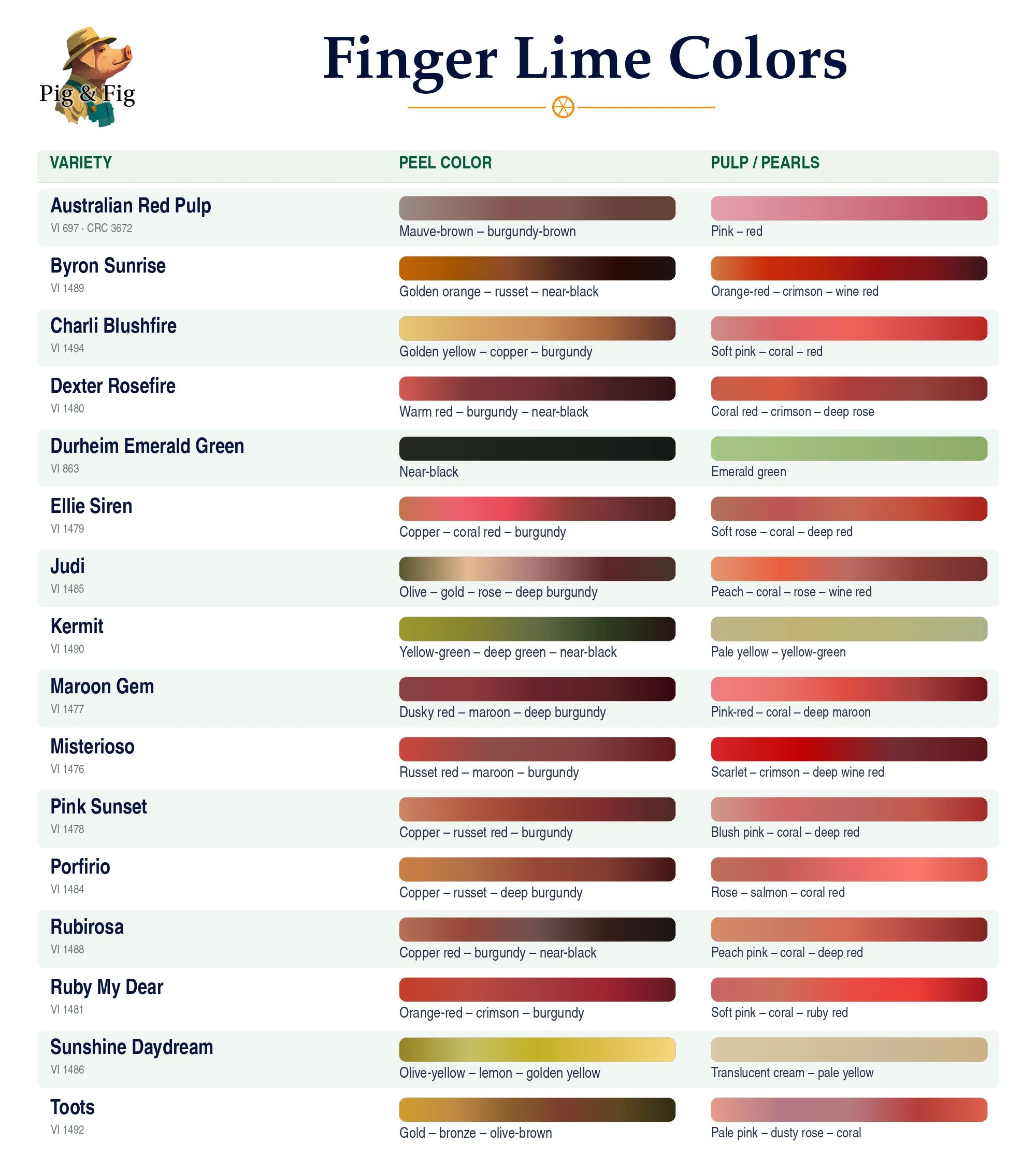
Finger limes are a distinct citrus species, Citrus australasica, native to the rainforests of eastern Australia. Their elongated fruit contains separate, rounded juice vesicles—the “citrus caviar” that bursts when eaten. Varieties differ substantially in peel and pulp color, fruit size and tree habit. The collection includes older selections and newer seedlings evaluated in Riverside, CA.

Ruby My Dear combines red to burgundy fruit with pink-red to brilliantly red citrus pearls. Raised from seed of Byron Sunrise, it was rated a small, spreading tree in Riverside trials. That pairing of tree habit and vivid pulp makes it interesting for backyard collectors who want both an unusual citrus and a colorful harvest to share.
Raised from seed of Byron Sunrise, Charli Blushfire shows how much variety hides within Australia's native finger lime. Its peel mixes gold, copper and burgundy, enclosing pearls in shades of blush pink, coral and red. Slice and gently squeeze for a colorful citrus garnish, or grow it alongside its parent to explore the family resemblance.
Kermit explores the green side of Australia's native finger lime, with green skin and translucent pale green to yellow-green pearls. Raised from seed of Judy's Everbearing, it combined a small-to-medium tree with high fruit set in Riverside trials. Its citrus caviar makes a fresh garnish for fish, tacos and drinks, and a useful color companion to red varieties.
Dark red fruit opens to a mosaic of pink, coral and red citrus pearls. Dexter Rosefire was selected from seed of Blunobia Pink Crystal and evaluated in Riverside, bringing Australian native citrus diversity into a backyard collection. Its caviar-like pulp adds bursts of tart juice to seafood, salads and drinks; expect a spreading, thorny tree.
Sunshine Daydream was selected from a seedling of Blunobia Pink Crystal, a pink-pulped Australian finger lime. This offspring took a different direction: golden-yellow skin and translucent white to pale cream citrus pearls. Its long, slender fruit and high fruit set in Riverside trials add to its backyard appeal. Cut one open for fresh “citrus caviar”—tiny beads that burst with tart juice, ready to spoon over seafood, salads or cocktails.
Ellie Siren combines red to burgundy skin with rose-pink and coral citrus pearls. A seedling of Blunobia Pink Crystal, it stood out for high fruit set in Riverside evaluations. Its upright habit and colorful fruit offer backyard growers something to admire on the tree and use in the kitchen: fresh citrus caviar for seafood, salads and drinks.
Judi's fruit can wear a patchwork of olive, gold, rose and burgundy, with pale pink to coral pearls inside. Selected from seed of Blunobia Pink Crystal, it was rated small to medium in Riverside trials. For a hobbyist, the appeal is the variation within each harvest—and the pleasure of adding freshly picked citrus caviar to a meal.
Maroon Gem puts pink-red to red citrus caviar inside slender, maroon fruit. This seedling of Blunobia Pink Crystal was rated a small, spreading tree in Riverside evaluations, giving backyard collectors a reason to look beyond color alone. Open a fruit at the table and spoon out the pearls for little bursts of tart juice.
Toots trades the dark-red look of many finger limes for mottled gold, bronze and olive-brown peel, opening to pink and coral citrus pearls. A Byron Sunrise seedling, it showed high fruit set on a large tree in Riverside trials. A choice for growers with room for a spreading canopy and an appetite for colorful, homegrown citrus caviar.
Pink Sunset pairs copper-red to burgundy peel with blush-pink and coral citrus pearls. It belongs to the Blunobia Pink Crystal seedling family evaluated in Riverside, where it developed an upright habit. For a backyard cook, the reward is citrus you can scatter by the spoonful: tiny beads that brighten seafood, salads or desserts with a tart pop.
Nearly black skin hides green citrus caviar—a striking contrast when the fruit is cut open. Durheim Emerald Green brings the unusual texture of Australia's native finger lime to the home kitchen, with pearls that release tart juice as you bite. Spoon them over fish, avocado or a favorite cocktail, or pair this variety with a red selection for contrasting garnishes.
Misterioso is a choice for growers drawn to deep color: maroon fruit holds citrus pearls ranging from bright crimson to dark wine red. Selected from seed of Blunobia Pink Crystal, it became a relatively large tree in Riverside trials. Give it room to develop, then bring its colorful citrus caviar to the kitchen for garnishes with both tartness and texture.
Byron Sunrise is both a colorful Australian selection and the seed parent of several newer finger limes. Its orange-red citrus caviar can deepen in color after exposure to air, while the peel ranges from golden russet to almost black. Grow it for homegrown garnishes—and the chance to collect a parent alongside its distinctly different offspring.
Long fruit on a relatively small tree gives Porfirio particular appeal for backyard collectors. In Riverside trials, its fruit reached roughly 3–4 inches, with red to burgundy peel and pink to red citrus pearls. This Blunobia Pink Crystal seedling brings Australia's native citrus heritage to the table as fresh, spoonable citrus caviar.
Rubirosa is a Byron Sunrise seedling with burgundy fruit and pearls ranging from pale pink to coral-red. High fruit set in Riverside trials adds a practical attraction to its color: more opportunities to enjoy homegrown citrus caviar. Its spreading tree needs space, but the harvest gives adventurous cooks a vivid finishing touch for seafood, tacos and drinks.
Australian Red Pulp belongs to a distinct citrus species native to the rainforests of eastern Australia. Established in UCR's collection in 1968, this older selection predates many of today's named, colorful finger limes. Its unusual finger-shaped fruit opens to tiny juice pearls that burst with tart citrus flavor—the “citrus caviar” that makes finger limes so appealing to adventurous cooks and backyard collectors.
Images used with permission from UC-Riverside Citrus Variety Collection. Do not copy or reproduce.