Limes

For cocktails, curries, ceviche, and citrus collectors.
Variety Characteristics
Classic Limes
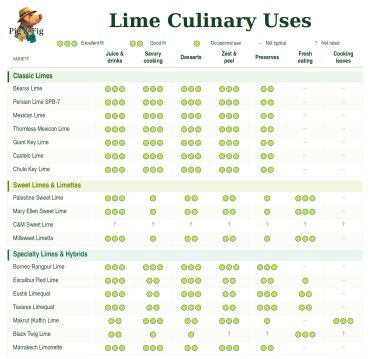
The familiar sour limes, with more variety than the grocery shelf suggests. Bearss and Persian types offer large, usually seedless fruit, while Mexican and Key lime selections bring distinctive fragrance and smaller, generally seedier fruit. The differences matter in the garden, too: Mexican types are especially sensitive to frost.

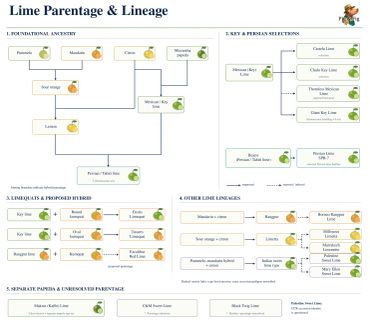
Bearss lime, also known as Persian or Tahiti lime, produces large, juicy, usually seedless fruit with the familiar tart flavor used for cooking, drinks, and fresh use. Nearly thornless branches make harvesting easier, and it is more cold tolerant than Mexican lime.
Wood Pocket Warning: Bearss Lime is susceptible to wood pocket, a genetic disorder that cannot be eliminated by CCPP therapies. It can cause dieback and premature death, sometimes at 7–10 years.
SPB-7 emerged from Florida's screening of 100,000+ lime trees for selections free of wood pocket, a damaging genetic disorder. It became an important Persian lime budline, producing large, seedless fruit. Despite this history, UCR's trees developed wood pocket, so this variety is not immune.
Wood Pocket Warning: This variety is susceptible to wood pocket, a genetic disorder that cannot be eliminated by CCPP therapies. It can cause dieback and premature death, sometimes at 7-10 years of age.
Key lime, Mexican lime, and West Indian lime are familiar names for this small, intensely aromatic citrus. Its thin rind and sharp, seedy juice explain why it remains useful even beside larger, seedless limes. The bushy tree has plenty of thorns and little tolerance for frost. Fruit turns yellowish as it matures, so a green rind is not the only sign of a usable lime.
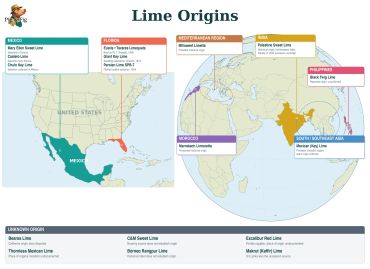
This thornless selection reached UCR from a Tustin ranch in 1937, with its earlier budwood reportedly brought from Mexico. UCR found its fruit virtually indistinguishable from ordinary Mexican lime. The practical difference is the tree: harvesting and tending it involves fewer encounters with thorns. Expect the familiar small, aromatic, acidic fruit rather than a new flavor.
Giant Key Lime began as a seedling whose chromosomes had naturally doubled. H. C. Barrett selected it in Florida in 1973; UCR describes fruit more than twice the size of ordinary Key limes, retaining their characteristic flavor and aroma. Barrett suggested it as a container ornamental. For a hobbyist, it offers a visible example of how a genetic change can reshape a familiar fruit.
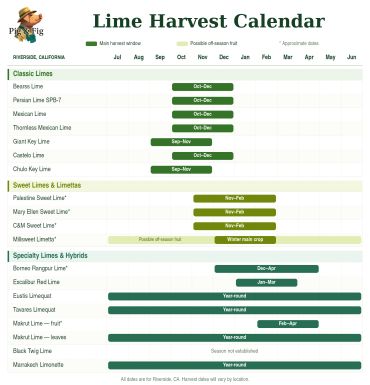
Castelo comes from the Yaqui Valley of Sonora, Mexico, and reached UCR through Raul Gonzales in 2001. It is a selection of Mexican lime, giving collectors a named regional example of the Key lime family. UCR records an October–December season at Riverside, but published comparisons are too limited to claim that it is sweeter, larger or more productive than ordinary Mexican lime.

Raul Gonzales collected Chulo in Mexico and considered it a particularly good Mexican lime selection. That personal endorsement is the heart of its story; detailed comparisons with other Key limes remain scarce. UCR records ripening from September to November at Riverside. It is a candidate for growers who enjoy comparing selections within a familiar citrus family.
Images used with permission from UC-Riverside Citrus Variety Collection. Do not copy or reproduce.
Sweet Limes & Limettas
These citrus challenge the assumption that a lime must be sour. Their mild flavor comes largely from low acidity, rather than unusually high sugar. Some people find them refreshing; others miss the tartness. From Mexican sweet limes to California’s historic Millsweet, this group rewards a curious palate.
A lime with almost none of the expected sourness. Palestine Sweet has tender, juicy flesh and a mild flavor that some find refreshing and others find bland. Its unusual sensitivity to growing conditions adds interest: UCR notes that coastal and desert fruit can look so different they seem like separate varieties. The tree develops a spreading, irregular canopy and needs room.
Mary Ellen brings the sweet-lime tradition of Mexico's Yaqui Valley into a backyard collection. Raul Gonzales supplied it to UCR in 2000. Its pale flesh is juicy and very low in acidity, with a few seeds. The gentle flavor can seem refreshing or bland depending on your palate; this is a fruit for exploring citrus without its usual sour bite. The tree is spreading and can become fairly large.
C&M is a California nursery sweet-lime selection offered through CCPP as VI 1051. It adds another accession for hobbyists interested in the mild side of citrus, but published information about this budline's fruit and growing habits is sparse. Its differences from Palestine and Mary Ellen remain to be established; a separate name does not yet demonstrate a distinct flavor.
Millsweet belongs to California's early citrus history: accounts cited by UCR describe this sweet-lemon type at Monterey and San Gabriel Mission in 1822. Its rounded fruit has a conspicuous nipple and pale juice with very little acidity, though a slight tartness can remain. It flowers and sets fruit through the year, and fruit holds well on the tree, allowing a leisurely backyard harvest.
Images used with permission from UC-Riverside Citrus Variety Collection. Do not copy or reproduce.
Specialty Limes & Hybrids
Orange-colored Rangpurs, lime–kumquat crosses, fragrant papedas and a sour Moroccan limetta show how much variety hides behind the word “lime.” Some supply tart juice, others aromatic leaves or distinctive peel. Their uses and growing habits differ considerably, making this a group to explore one variety at a time.
Orange peel and orange flesh give Borneo Rangpur the appearance of a small mandarin, but its juice is strongly sour. UCR has maintained this accession since 1930. The fruit hangs well on the tree, with the main crop in winter and early spring. Rangpurs have a long history as California patio and backyard citrus, offering a mandarin-like fruit that can do a lime's job in the kitchen.
Excalibur had a following among Florida chefs before David Karp brought it to UCR's attention. Its fruit was used for sorbet and red-lime martinis at the Sundy House in Delray Beach. Thin, edible peel and tart juice make it interesting for kitchen experiments. A Rangpur–kumquat cross is the reported parentage, but remains unconfirmed. UCR records its main season as January–March at Riverside.
Walter Swingle crossed a West Indian lime with a round kumquat in 1909 to create Eustis. The small, acidic fruit closely resembles lime, while the tree gains some cold tolerance from its kumquat parent. It still needs protection from hard freezes. Long grown in California patio pots, Eustis offers a practical way to explore citrus breeding in a small collection.
The Tavares accession at UCR came from Ottillia Bier's backyard tree, originally purchased at a garden center. This lime–oval kumquat hybrid shows more orange color in its fruit than Eustis and has pink-tinged flower buds. Its tart fruit can stand in for lime, and the tree tolerates more cold than its lime parent. UCR lists fruit availability through the year at Riverside.
The leaves are the main reason to grow this citrus. Also called makrut lime, it supplies the pungent fragrance familiar in Thai and Indonesian cooking. Each leaf looks like two joined together because its winged stalk is almost as broad as the blade. The knobbly fruit is very sour and slightly bitter, but a backyard tree can provide fresh aromatic leaves without waiting for a fruit harvest.
Black Twig's dark branches and long thorns give it an unusual silhouette among citrus. Nursery reports describe easily peeled fruit with a mild, sweet lime flavor, sometimes compared to lime candy. CCPP groups it with papedas and their hybrids, but its precise identity and the performance of VI 1561 are not well documented. Its appeal is chiefly to growers who enjoy exploring less familiar citrus.
Marrakech resembles Millsweet closely enough to fool the eye, but a taste reveals very sour, aromatic flesh. Imported from Morocco at citrus specialist W. P. Bitters's request, it bears rounded, sometimes ribbed fruit with a prominent nipple. Purple flower buds add ornamental interest. It can serve as a fragrant lemon substitute, and UCR records a year-round season at Riverside.
Images used with permission from UC-Riverside Citrus Variety Collection. Do not copy or reproduce.