Pummelos

Pummelo or pomelo? Pummelo obviously.
Variety Characteristics
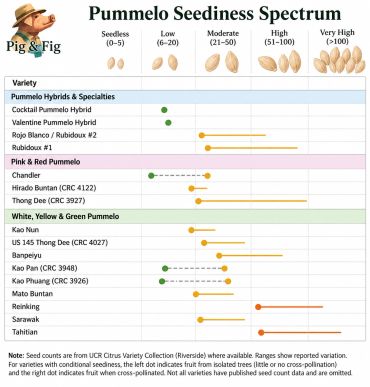
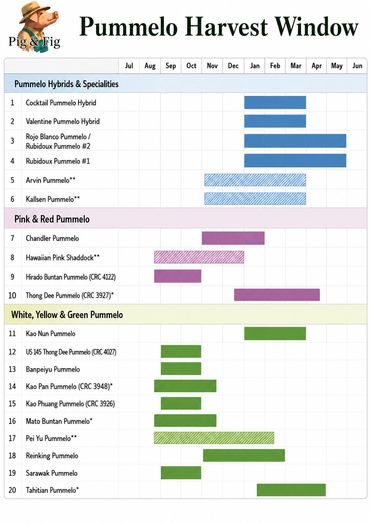
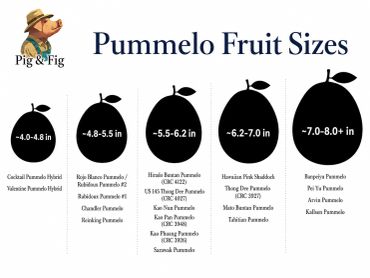
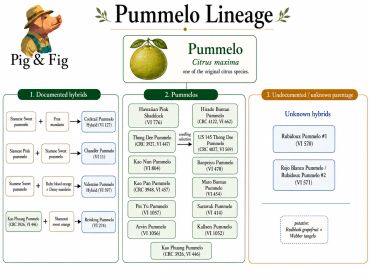
Pummelo Hybrids & Specialties
This section brings together pummelo hybrids and unusual selections that do not fit neatly into the main flesh-color groups. It includes deliberate crosses such as Cocktail and Valentine, obscure historic material, unusual shaddocks, and newer accessions whose fruit characteristics are still not well documented.

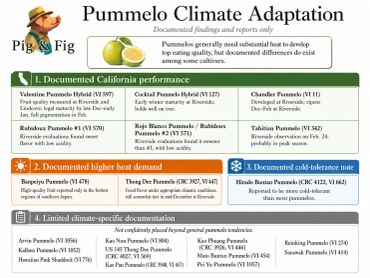
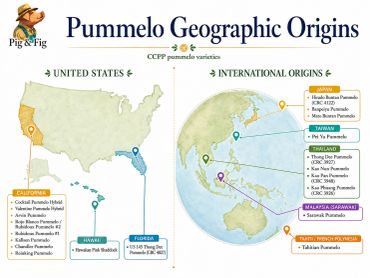
Cocktail Pummelo is commonly called a grapefruit, although it is actually a hybrid of Siamese Sweet pummelo and Frua mandarin. It was never formally released by UCR, but escaped from the breeding program and became popular with California home growers and farmers-market producers and is often labeled as a grapefruit by nurseries. The unusual fruit combines the sweetness of a low-acid pummelo with the flavor and juiciness of a mandarin.
Valentine was bred at UCR from Siamese Sweet pummelo and a Ruby blood orange–Dancy mandarin hybrid. Its name came from Citrus Variety Collection staffer Ottillia “Toots” Bier: the fruit colors up around Valentine’s Day, and when cut lengthwise and inverted, its red flesh can resemble a heart. The flavor is sweet, floral, and low in acid. Its red color comes from anthocyanins—the same pigment family found in blood oranges—rather than the lycopene that colors pink and red grapefruit.
Rojo Blanco, also known as Rubidoux #2, nearly disappeared because its identity and pedigree had been lost; UCR considered removing it from the collection until staff tasted the fruit and decided it was worth keeping. Later records pointed to a USDA Redblush grapefruit × Webber tangelo cross made at Indio, CA. The fruit has pink, tender flesh, very low bitterness and acidity, and a thick pummelo-like rind; UCR found it sweeter than Rubidoux #1.
Rubidoux #1 is one of two mystery hybrids preserved from the USDA Date and Citrus Station at Indio, CA after the station closed. Its parentage was lost, and the selections remained in CCPP’s Rubidoux screenhouse until they were finally released in 2010. The fruit has light-pink, tender, very juicy flesh with fine texture, very low bitterness and acidity, and a thick pummelo-like rind. It is generally less sweet than its sibling, Rojo Blanco (#2).
Arvin Pummelo came from Willits & Newcomb Nursery in Arvin, California, giving this obscure accession a distinctly local California origin. CCPP received the budwood in 1996, but the variety was only recently released from quarantine after spending decades in the clean-stock system. Published sources still provide almost no description of the fruit itself—including flesh color—so for now it remains one of the least documented pummelos in the collection.
Kallsen is a recently released U.S. pummelo accession that spent more than a decade in CCPP quarantine and clean-stock work before becoming public domain. Givaudan identifies it as Citrus maxima, confirming it is a true pummelo rather than a hybrid. Beyond that, published fruit descriptions remain essentially absent: flesh color, flavor, seediness, and other fruit traits are still undocumented.
Images used with permission from UC-Riverside Citrus Variety Collection. Do not copy or reproduce.
White, Yellow & Green Pummelos
This group includes many of the classic Asian pummelos, with flesh ranging from ivory and pale yellow to greenish or amber tones. Their appeal is diversity: some are clean and sweet, others more floral, melon-like, or aromatic, offering a much broader range of flavor than their pale appearance might suggest.
US 145 (CRC 4027) is a USDA selection from Thong Dee seedlings planted in Florida in 1947. It was kept primarily as breeding material because of an unusual ability to recover and fruit after severe freeze damage—not because the tree itself is especially freeze-resistant. The large, light-yellow fruit is juicy and sweet, reaching unusually high sugars for a pummelo.
Banpeiyu is one of the giants of the citrus world—the cultivar holds the record for the heaviest pummelo, at nearly 11 pounds. Closely associated with Yatsushiro, Japan, the enormous fruits are used in seasonal displays and even floated in winter hot-spring baths for their fragrance. Beneath the thick rind is pale-yellow flesh with firm, juicy vesicles and a pleasant balance of sweetness and acidity.
Kao Pan is one of Thailand’s classic pummelos, documented by American horticulturist and USDA plant explorer George Groff as one of the country’s most highly regarded varieties. Its name means “white flat,” describing its pale flesh and slightly flattened fruit. The flavor is sweet, mildly acidic, and nearly free of bitterness; isolated flowers can produce nearly seedless fruit, while cross-pollination increases seediness.
Kao Phuang is one of Thailand’s classic pummelos, described by horticulturist and plant explorer George Groff as one of the country’s two best varieties—some growers even preferred it to Kao Pan. UCR later found its flavor superior to Kao Pan in California. The fruit is large and distinctly pear-shaped, with white, firm, juicy flesh and a brighter, more acidic flavor than Kao Pan; it also holds its quality well on the tree.
Mato Buntan is an old East Asian pummelo said to have moved from southern China to Taiwan around 1700 and later to Japan. Historically important in both Taiwan and Japan, it is notable for its naturally small, drooping tree—unusual among pummelos. The fruit is medium-large and seedy, with pale greenish-yellow flesh that is crisp, sweet, mildly acidic, and sometimes faintly bitter, though generally less juicy than many pummelos.
Pei Yu is an old Taiwanese white-pummelo type whose name is essentially descriptive: pei/bai means “white” and yumeans pummelo. Early horticultural accounts listed Pei Yu among the commonly grown pummelos of Formosa, and Taiwan’s Ministry of Agriculture still translates 白柚 as “pummelo (peiyu).” The CCPP accession came through USDA-ARS, preserving a fruit type with deep roots in Taiwanese citrus culture.
Reinking was created in 1948 as a supposed Kao Phuang pummelo × Shamouti sweet orange cross, but later USDA work and DNA testing showed it is actually pure pummelo. Researchers concluded that stray pummelo pollen was the likely explanation despite the original cross being bagged. The large, bell-shaped fruit has juicy light-yellow flesh, a slightly tart flavor, and has been described by one California grower as showing delicate lime and pineapple notes.
Sarawak is an unusually juicy, thin-rinded pummelo with greenish flesh and a distinctive sweet-tart flavor often compared with lime or melon; in California it has even been nicknamed “margarita fruit.” Sarawak and Tahitian have sometimes been treated as the same variety, although CCPP maintains separate accessions of each. UCR’s Sarawak accession came from Tahiti in 1955, and the fruit is typically quite seedy.
Tahitian Pummelo was long called “Tahitian grapefruit,” but citrus authorities recognized it as a true pummelo. Its origin is obscure; an old account suggests seed came from Borneo to Tahiti and later Hawaii. The fruit is unusually juicy for a pummelo, with relatively thin rind, greenish-amber flesh, and a sweet-tart flavor often described as melon- or lime-like. UCR notes that people tend either to enjoy the unusual flavor or dislike it.
Kao Nun is an obscure Asian pummelo received from National Taiwan University, probably of Thai origin. Its pale greenish-white flesh matches the meaning of kao (“white”) found in several Thai pummelo names. Very little has been published about the selection, making it one of the less familiar pummelos preserved in the UCR collection.
Images used with permission from UC-Riverside Citrus Variety Collection. Do not copy or reproduce.
Pink & Red Pummelos
Pink and red pummelos bring some of the most striking color to the species, ranging from soft blush tones to rich coral-pink flesh. Despite the color, they remain distinctly pummelo in character, generally emphasizing sweetness, fragrance, and mild acidity rather than the stronger bitterness associated with grapefruit.
Chandler is the benchmark California pummelo, a UCR cross of Siamese Sweet and Siamese Pink that became the state’s leading commercial cultivar. Its flesh can range from light to surprisingly deep pink depending on growing conditions, with mild, sweet flavor and little bitterness. An unusual trait for backyard growers: isolated trees can produce nearly seedless fruit, while nearby fertile citrus can make it quite seedy.
“Shaddock” is an old English name for pummelo, and this Hawaiian selection is very much a true pummelo rather than a hybrid. It produces impressively large fruit with attractive rose-pink flesh and a mild, sweet, low-acid flavor. The thick rind and large segments give it the classic pummelo eating experience, quite different from a typical grapefruit.
Hirado Buntan is one of Japan’s classic pummelos, but the CCPP accession is especially interesting: it is a pink-fleshed Florida seedling selection of the normally yellow-fleshed Japanese variety. The fruit is large, sweet, juicy, and regarded as exceptionally high quality. It is also reported to be more cold-tolerant than most pummelos, possibly making it more suitable for many California growers.
Thong Dee is a classic Thai pummelo with a surprisingly tangled California history. Early introductions came by seed and produced pale, mediocre fruit unlike the original. The current CCPP accession arrived later as budwood from Hawaii and restored the true type: very large fruit with juicy, pink-tinged flesh, good flavor, and segments that separate cleanly from the membranes.
Images used with permission from UC-Riverside Citrus Variety Collection. Do not copy or reproduce.